
// OpenBIM / IFC
IFC audit: the checkpoints that reveal a model's quality
Published on 28 April 2026 · 8 min read · CADatWORK Learning
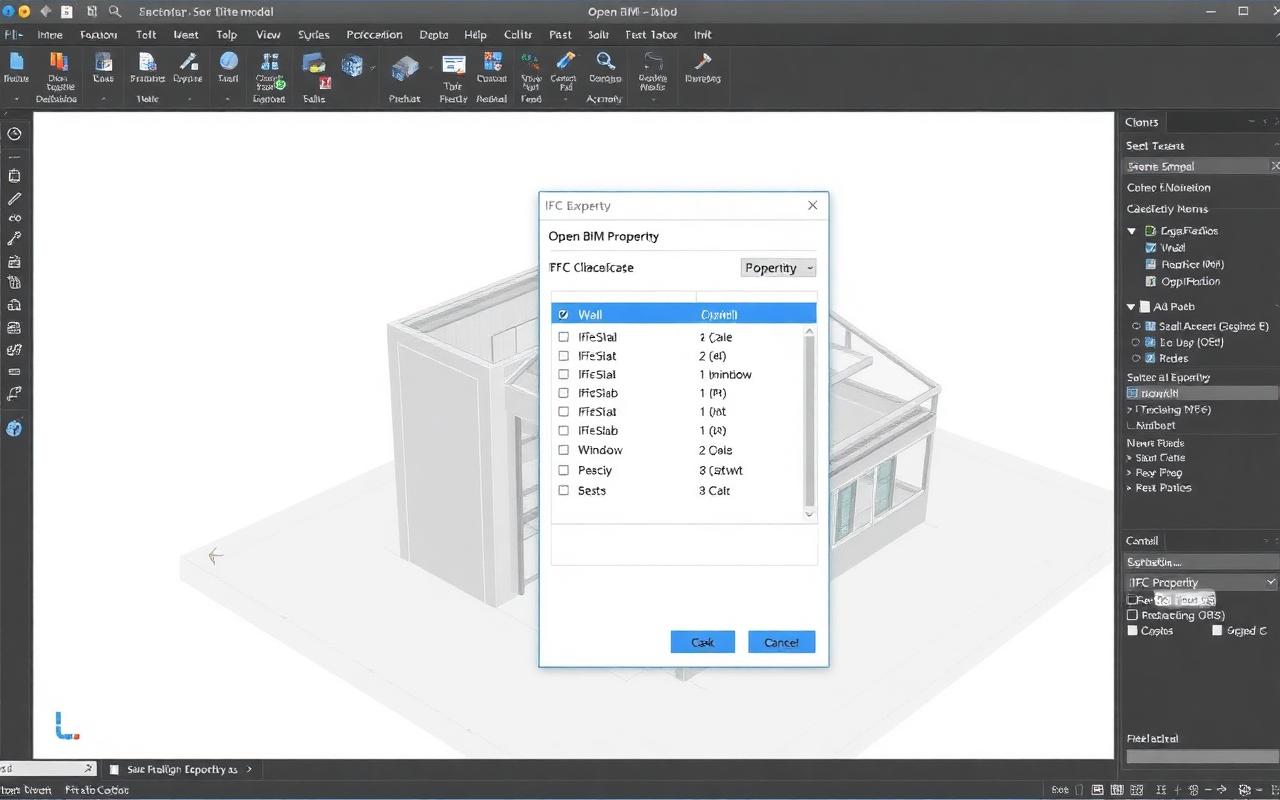
"The file opens, so it's fine." This is the most costly misunderstanding in OpenBIM. An IFC can display perfectly and still be unusable: badly typed objects, missing properties, inconsistent units, arbitrary position.
Here is the order in which we audit a delivery, from the most structural to the finest point. Each failed step makes the following ones pointless.
1. Version, integrity and scope
We first check the schema version (IFC2x3, IFC4, IFC4.3), the originating application, and the actual presence of the expected scope: right building, right phase, right levels. An unreported partial delivery skews every later analysis.
2. Object typing
A wall exported as a generic object (IfcBuildingElementProxy) breaks every category-based analysis. Typing is the first condition for sorting, quantifying and checking.
This flaw rarely comes from the modeller: it comes from export settings or objects created with the wrong tool. It is fixed upstream, in the template and the translator.
3. Classification and identification
We check that the required classification system is present and complete, and that identifiers (GUIDs) stay stable between two successive deliveries. Without stable identifiers, no change tracking or correction is reliable.
4. Properties and units
Next comes compliance with the BEP's requirements: do the expected properties exist, on the right objects, with the right name, the right unit and plausible values?
- Empty properties, or text entered instead of a numeric value
- Naming variants (upper case, accents, spaces) creating parallel columns
- Millimetres and metres mixed in the same property set
- Values inherited from a previous project, never updated
5. Georeferencing
Base point, survey point, elevation, true north rotation: unshared georeferencing is the most common cause of misaligned federated models. It is checked against distinctive points, not a visual impression.
6. Duplicates, spaces and geometric consistency
We finish with overlapping duplicates, orphan objects outside any level, unclosed or unassigned spaces, and degenerate geometries. These flaws pollute quantities and generate phantom clashes during project review.
Fix the cause, not the symptom
An audit is only worthwhile if it traces back to the source: template, export settings, modelling method or understanding of the requirement. Fixing the delivered file without fixing the chain guarantees the same audit report at the next delivery.
Key takeaways
- A readable IFC is not a compliant IFC: typing comes before everything else.
- Property requirements must be checked automatically, not by eye.
- Georeferencing is checked against shared distinctive points.
- Every recurring flaw points to an upstream cause: template or export.
Go further
A project, a question?
Our interventions are built on your production context.
Contact us